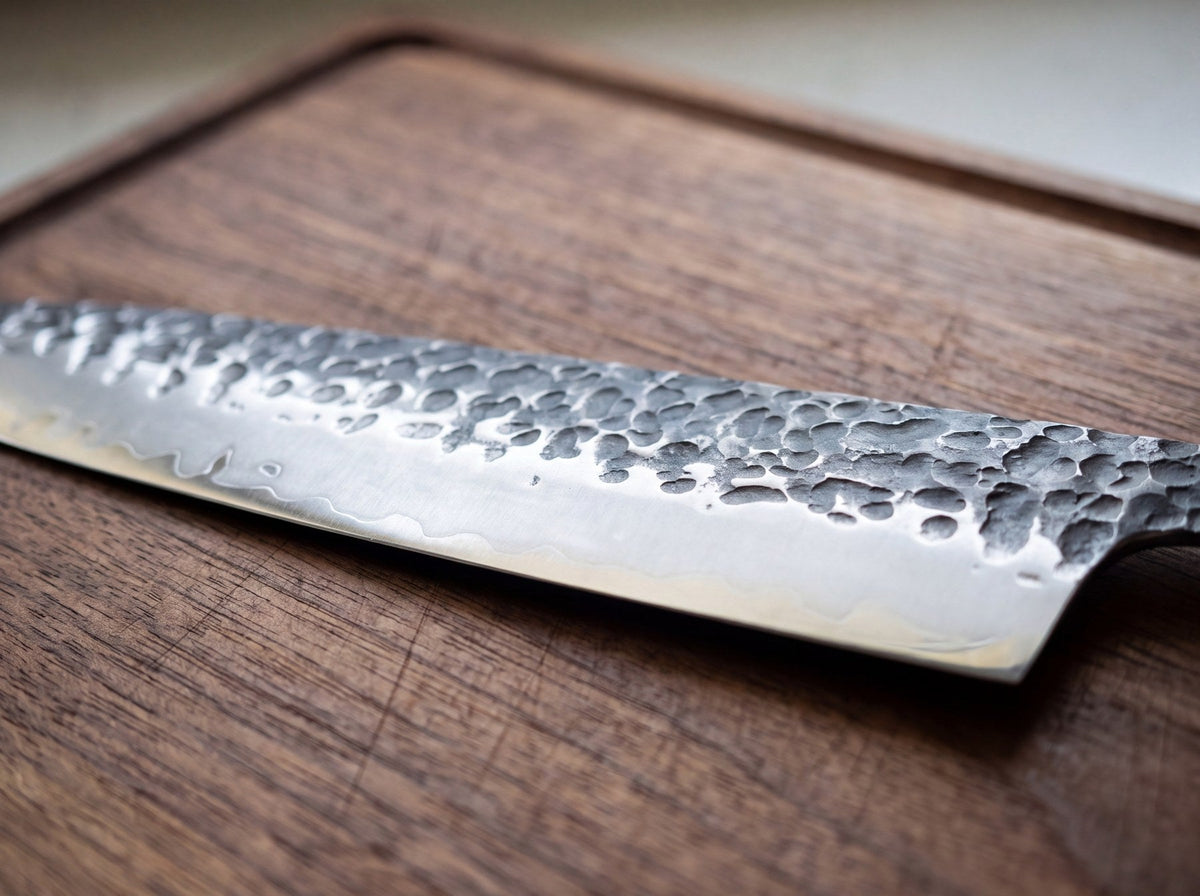
A HARUTANI chef knife has a VG-10 steel core hardened to 60 ±2 HRC, wrapped in 67 layers of Damascus cladding and sharpened to a 12 to 15 degree edge on each side. That hard, thin edge is what lets it glide through a tomato skin. It also asks for slightly different habits than a softer Western knife, and the whole routine takes about a minute.
The Daily Routine
- Wipe as you work. Wipe food off the blade with a damp cloth as you go, so nothing dries onto the steel. After raw meat, poultry or seafood, wash the knife with warm water and mild soap before it touches other ingredients, and clean the board too.
- Wash by hand right after cooking. Use warm water, a drop of mild dish soap and a soft sponge. Never the dishwasher, and never leave the knife soaking in the sink.
- Dry it completely, straight away. Towel dry both sides of the blade, the spine and the handle. Do not leave it on a rack to air dry.
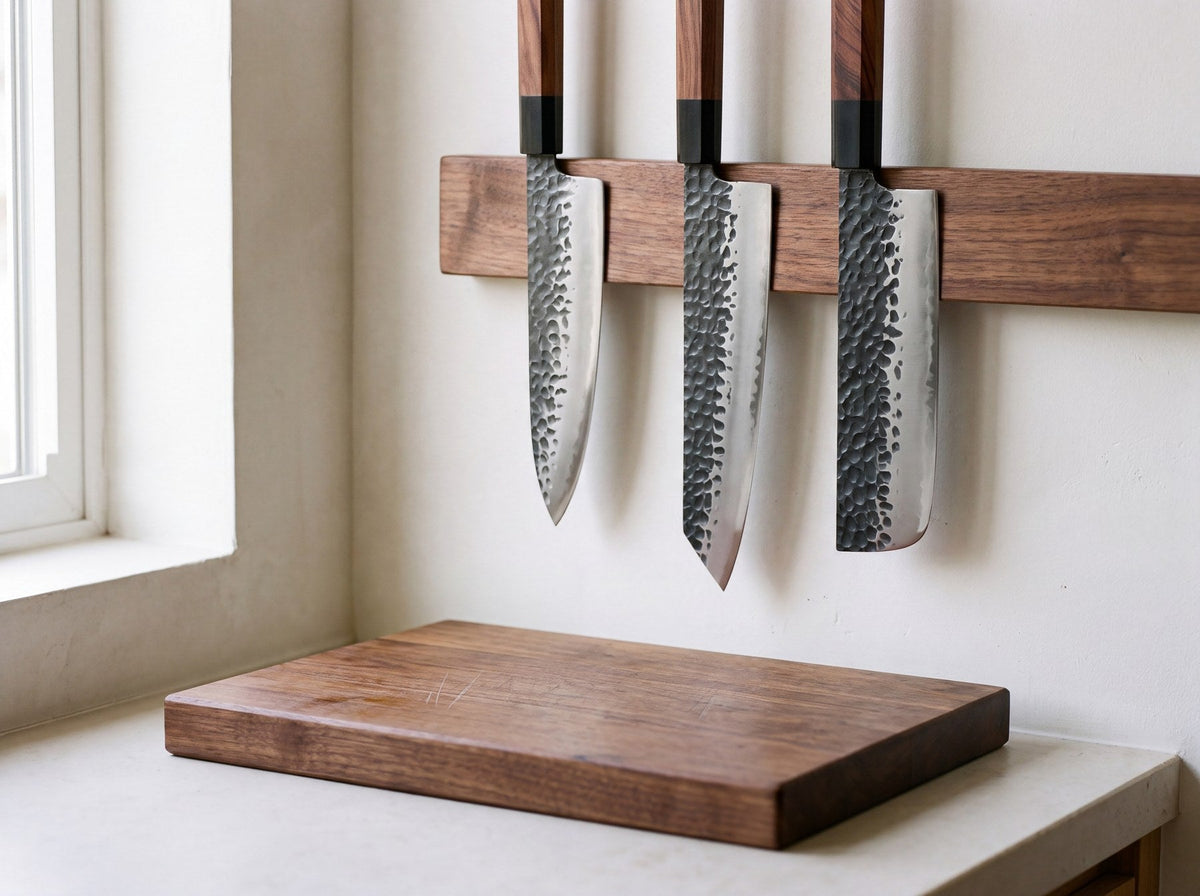
- Put it away with the edge protected. A block, a magnetic strip, a drawer insert or a blade guard, never loose in a drawer.
Tip: Dry from the spine side with the edge pointing away from your fingers. Never pinch the edge inside the towel and pull it through.
Do and Don't at a Glance
- Do hand wash with warm water and mild soap, then dry at once.
- Do cut on a wood or plastic board.
- Do store the knife so the edge never touches metal.
- Don't put it in the dishwasher or leave it soaking.
- Don't cut on glass, stone, marble or ceramic.
- Don't use a honing steel, twist the blade to pry food apart, or cut through bone or frozen food.
Choose the Right Cutting Board
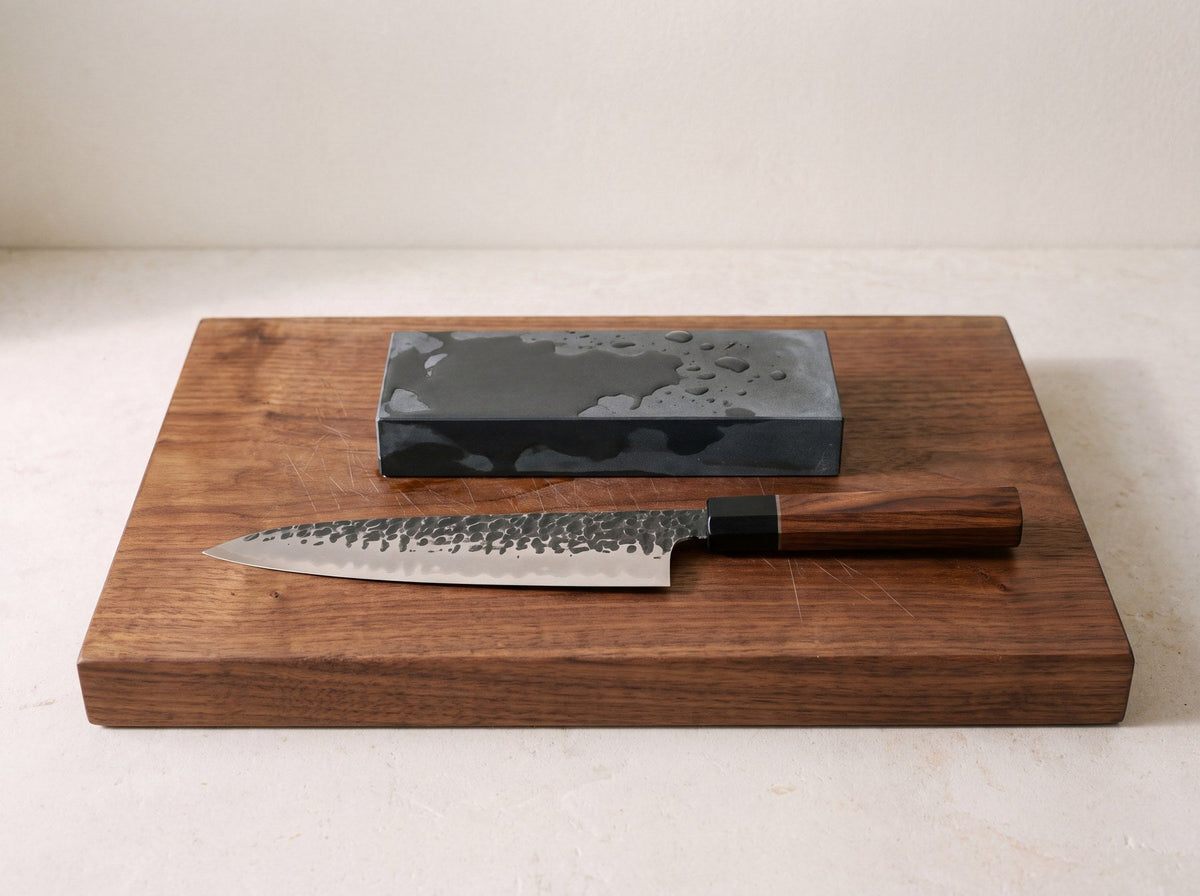
The board under the knife matters almost as much as the knife. Choose wood or food-grade plastic: both give slightly under the edge, so it stays keen. Avoid glass, stone, marble and ceramic. These unforgiving surfaces can dull or chip a fine edge in a single session. Keep a glass or marble board for serving and cut on wood or plastic.
Cut With the Blade, Not Against It
A thin, hard edge is built for clean slicing, not force. Use a smooth forward or pulling stroke and let the blade do the work. To move chopped food across the board, flip the knife and use the spine, because scraping sideways with the edge bends it. Leave bones, frozen food and prying jobs to a heavier tool.
Skip the Honing Steel
A ridged honing steel is made for softer Western edges. On a hard edge like VG-10 at 60 ±2 HRC it can chip the edge rather than straighten it, so we do not recommend one. If you like to refresh the edge between sharpenings, use a fine ceramic rod or a leather strop instead: a few light strokes on each side at the same angle as the edge, with almost no pressure.
When the knife no longer cuts cleanly even after a gentle strop, it is time for the whetstone. How often depends on how much you cook and what you cut on. Our guide on how to sharpen a Japanese chef knife walks through it step by step.
Spots, Rust and Acidic Foods
VG-10 is a stainless steel, so it resists rust far better than carbon steel and does not build a patina. Stainless is not rust proof, though. Water, salt or acid left on the blade can leave small spots over time. Rinse and dry the knife soon after cutting citrus, tomatoes, pickles or anything in vinegar or brine.
If a spot appears, clean it early with a soft cloth and a little dish soap, then rinse and dry. Avoid steel wool and scouring powder, which scratch the Damascus finish.
Look After the Handle
Dry the handle as carefully as the blade, and never let it sit in water. Resin and G10 handles need nothing more. A wooden handle that starts to look dull or pale can take a thin coat of food-safe mineral oil; wipe off the excess and let it dry before use.
Store It So the Edge Stays Sharp
Where the knife lives between meals decides a lot. A knife block, a magnetic strip, an in-drawer tray with separate slots or a blade guard all keep the edge off metal and other tools. Our guide on how to store Japanese chef knives compares each option.