Japanese chef knives are precision kitchen blades designed with thin profiles, hardened steels, and specialized shapes for controlled cutting performance. The right Japanese knife depends on your cooking style, preferred blade shape, steel type, maintenance habits, and budget.
What Are Japanese Chef Knives?
Japanese chef knives are kitchen blades developed around precision cutting, refined blade geometry, and traditional craftsmanship. Unlike many Western-style knives built for heavier chopping, Japanese blades are often designed with thinner profiles, sharper edges, and carefully balanced construction for detailed preparation work.
The performance of a Japanese knife comes from the combination of several elements: steel selection, heat treatment, blade thickness, edge angle, and handle design. These factors influence how the knife feels in hand, how easily it moves through ingredients, and how it performs over time.
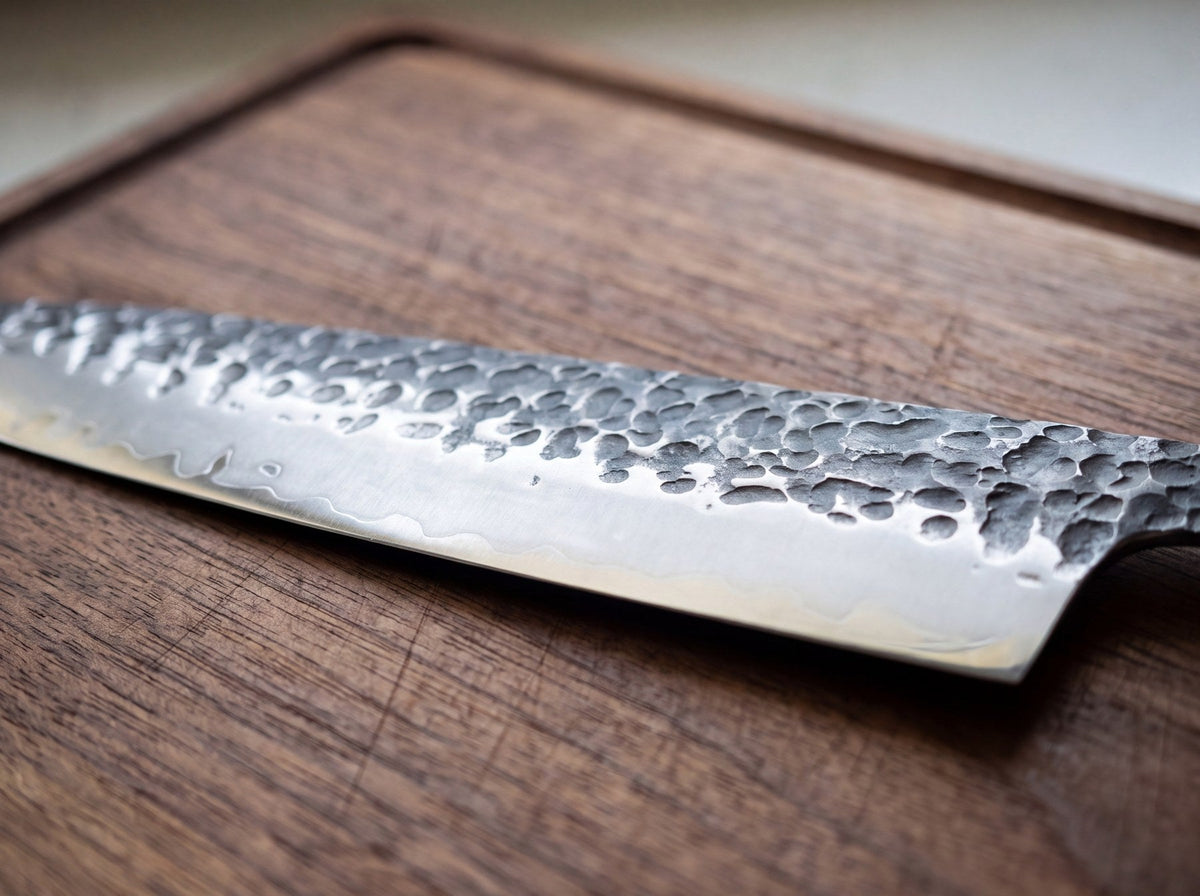
Japanese knife-making has a long connection with craftsmanship and metallurgy. Regions such as Seki, Japan, are known for blade production traditions that combine historical techniques with modern manufacturing methods. HARUTANI focuses on hand-finished Japanese knives crafted in Seki, Japan, featuring Damascus steel construction with a VG-10 core for a balance of durability, sharpness, and refined design.
For cooks choosing their first Japanese blade, understanding the relationship between knife style and cooking habits is the foundation for selecting the right tool.
Japanese Chef Knife Types Explained
Japanese chef knives are available in several specialized shapes, each designed around different preparation methods. A chef preparing proteins, a home cook preparing vegetables, and a collector seeking craftsmanship may all prefer different blade profiles.
The most common Japanese kitchen knives include:
| Knife Type | Best Use | Typical Size | Ideal User |
|---|---|---|---|
| Gyuto | General preparation | 180-240mm | Professional chefs and serious cooks |
| Santoku | Everyday slicing and chopping | 165-180mm | Home cooks |
| Nakiri | Vegetables | 165-180mm | Vegetable preparation |
| Kiritsuke | Precision cutting | 210mm+ | Experienced cooks |
| Petty | Detail work | 120-150mm | Small preparation tasks |
Each knife shape has a different balance of blade length, cutting motion, and control. Choosing a blade based only on appearance can lead to a knife that does not match the way you cook.
Gyuto: The Versatile Japanese Chef Knife
The Gyuto is often considered the Japanese equivalent of a Western chef knife. It is one of the most versatile blade styles, designed for a wide range of kitchen tasks including slicing meat, preparing vegetables, and chopping herbs.
Common Gyuto sizes include 210mm and 240mm blades. The longer profile provides cutting space, while the thinner geometry allows precise movement through ingredients.
Most Gyuto knives feature a double bevel edge, making them suitable for both left-handed and right-handed users. Compared with many Western chef knives, a Gyuto typically has a lighter feel and a thinner cutting profile.
A Gyuto is often chosen by professional chefs and experienced home cooks who want one primary knife capable of handling most kitchen preparation tasks.
Santoku: The Everyday Japanese Kitchen Knife
The Santoku is one of the most recognized Japanese kitchen knife styles. The name translates to “three virtues,” referring traditionally to its ability to handle three major kitchen tasks: slicing, chopping, and mincing.
With a shorter blade profile compared with many Gyuto knives, Santoku knives usually range from 165mm to 180mm. Their compact size makes them comfortable for everyday cooking, especially in home kitchens with limited workspace.
Santoku knives are commonly used with a push-cutting motion rather than the rocking technique often associated with Western chef knives. Their balance, manageable size, and versatility make them a popular choice for cooks who want a practical everyday blade.

Nakiri and Kiritsuke: Specialized Japanese Blades
Japanese knife makers also create specialized blades for specific preparation styles.
Nakiri Knife
The Nakiri is designed primarily for vegetable preparation. Its straight edge and squared blade profile allow consistent contact with the cutting board, making it effective for chopping leafy greens, root vegetables, and other produce.
The flat cutting edge encourages an up-and-down chopping motion rather than rocking cuts.
Kiritsuke Knife
The Kiritsuke has a longer, more refined blade profile designed for precision work. Traditionally associated with experienced Japanese chefs, this knife requires more control because of its length and pointed tip.
A Kiritsuke chef knife can be used for detailed slicing, vegetable preparation, and presentation-focused cuts where accuracy matters.
Japanese Chef Knife Materials: Understanding Steel Types
The steel used in a Japanese knife has a major influence on sharpness, edge retention, maintenance needs, and overall performance. Different steels create different experiences for the user, and there is no single steel type suitable for every cooking style.
High-end Japanese chef knives often use carefully selected steels that balance hardness, durability, and sharpening characteristics.
| Steel Type | Characteristics | Maintenance |
|---|---|---|
| VG-10 | Stainless steel with balanced edge retention | Low maintenance |
| SG2/R2 | Premium powder steel with high performance | Requires proper care |
| White Steel | Known for excellent sharpness potential | Requires more maintenance |
| Blue Steel | Focused on edge retention and durability | Moderate care |
Stainless Steel vs Carbon Steel
Stainless steels are popular among cooks who want easier maintenance because they resist corrosion and staining. VG-10 is widely used in Japanese kitchen knives because it offers a combination of hardness, corrosion resistance, and reliable edge performance.
Carbon steels can achieve extremely sharp edges and are appreciated by many experienced cooks. However, they require more attention because exposure to moisture and acidic ingredients can affect the blade surface.
Hardness and Edge Retention
Japanese knives often use harder steel compared with many traditional Western kitchen knives. Hardness is commonly measured using the Rockwell C scale (HRC), and many Japanese blades fall within approximately 58-62 HRC.
Higher hardness can support thinner edges and longer edge retention, but harder blades also require careful handling. They are less suitable for tasks involving bones, frozen foods, or heavy twisting motions.
What Makes High End Japanese Chef Knives Different?
High end Japanese chef knives are distinguished by the attention given to materials, construction, finishing, and blade geometry. The difference is not only the steel used but also how the entire knife is designed and finished.
| Feature | Standard Knife | High-End Japanese Knife |
|---|---|---|
| Steel | Basic stainless steel | VG-10, SG2, premium steels |
| Construction | Machine production | Hand finishing |
| Balance | General ergonomics | Refined handling |
| Edge | Functional cutting ability | Precision blade geometry |
A premium Japanese knife often reflects careful consideration of every component. The blade profile, handle shape, weight distribution, and finishing techniques all influence how the knife performs during preparation.
Hand-finishing is an important part of Japanese knife craftsmanship. It allows makers to refine blade surfaces, improve balance, and create a more controlled cutting experience.
HARUTANI emphasizes hand-finished Japanese knives, Japanese manufacturing heritage, Damascus designs, and traditional knife-making approaches as part of its product philosophy.
For chefs and collectors, a high-end knife is not only a kitchen tool but also an example of craftsmanship, material selection, and long-term ownership value.
Japanese Damascus Chef Knives: Beauty Meets Performance
Japanese Damascus chef knives combine traditional visual appeal with modern blade engineering. The distinctive layered pattern on a Damascus blade is created through the arrangement and finishing of multiple steel layers, creating a unique appearance across the blade surface.
The Damascus pattern itself does not determine cutting performance. The knife’s core steel, heat treatment, blade geometry, and edge preparation have a greater influence on sharpness, durability, and edge retention.
| Damascus Feature | What It Provides |
|---|---|
| Layered exterior | Decorative blade pattern and visual character |
| VG-10 core | Cutting performance and corrosion resistance |
| Hardened steel | Edge retention and durability |
HARUTANI Damascus designs feature layered construction with VG-10 cores, combining traditional aesthetics with practical kitchen performance.
For collectors and cooking enthusiasts, Japanese Damascus chef knives can offer both functional performance and craftsmanship value. A well-made Damascus knife should be evaluated by its steel quality, construction, balance, and finishing rather than the pattern alone.

Japanese Chef Knives vs Western Chef Knives
Japanese and Western chef knives are built around different culinary traditions. Both styles can perform exceptionally well, but their designs reflect different approaches to cutting.
| Feature | Japanese Knife | Western Knife |
|---|---|---|
| Weight | Lightweight | Heavier |
| Edge angle | More acute | Wider |
| Blade thickness | Thinner | Thicker |
| Cutting style | Precision slicing | Rock chopping |
Japanese blades often prioritize precision, controlled cuts, and ingredient-focused preparation. Their thinner blade geometry allows clean slicing with less resistance.
Western chef knives are generally designed with heavier construction and thicker blades, which can make them suitable for more forceful cutting techniques.
The right choice depends on personal technique, cooking habits, and maintenance preferences. A cook who values delicate slicing may prefer the characteristics of a Japanese blade, while someone accustomed to heavier chopping motions may prefer a Western-style knife.
How to Choose the Right Japanese Chef Knife
Selecting the right Japanese chef knife starts with understanding how you prepare food. Blade shape, size, steel type, and maintenance requirements should match your kitchen routine.
For Professional Chefs
A Gyuto between 210mm and 240mm is often a practical choice for professional kitchens because it provides enough blade length for larger ingredients while maintaining control during detailed preparation.
For Home Cooks
A Santoku or Gyuto can work well for everyday cooking. Santoku knives provide compact handling, while Gyuto knives offer greater versatility for cooks who prepare a wider variety of ingredients.
For Vegetable Preparation
A Nakiri is designed for cooks who frequently prepare vegetables. Its straight edge supports consistent chopping and clean cuts through produce.
For Collectors
Collectors often appreciate Damascus or handcrafted premium knives because of their combination of materials, craftsmanship, and visual design.
- Before choosing a knife, consider:
- Cooking style and common ingredients
- Hand size and grip comfort
- Available workspace
- Preferred maintenance level
- Budget range
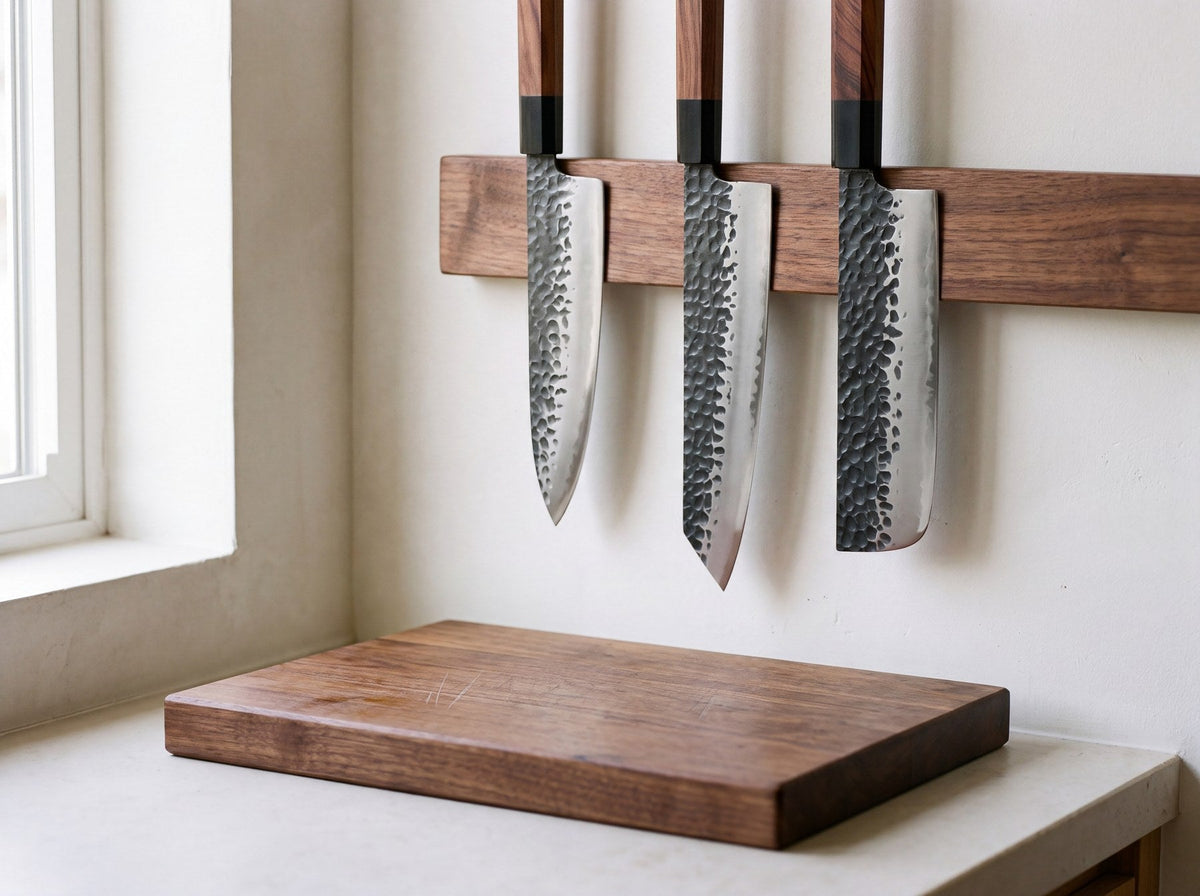
HARUTANI offers Japanese kitchen knives across categories including Gyuto, Santoku, Nakiri, Kiritsuke, Utility, Petty knives, Cleavers, and knife sets.
Caring for Japanese Chef Knives
Proper care helps preserve the sharpness, finish, and performance of a Japanese knife. Even a carefully crafted blade requires regular maintenance to perform consistently.
Follow these practices:
- Hand wash the knife after use
- Dry the blade immediately after cleaning
- Use suitable cutting boards such as wood or soft synthetic surfaces
- Avoid cutting through bones, frozen foods, or hard materials
- Maintain the edge with appropriate sharpening tools
Sharpening Japanese Chef Knives
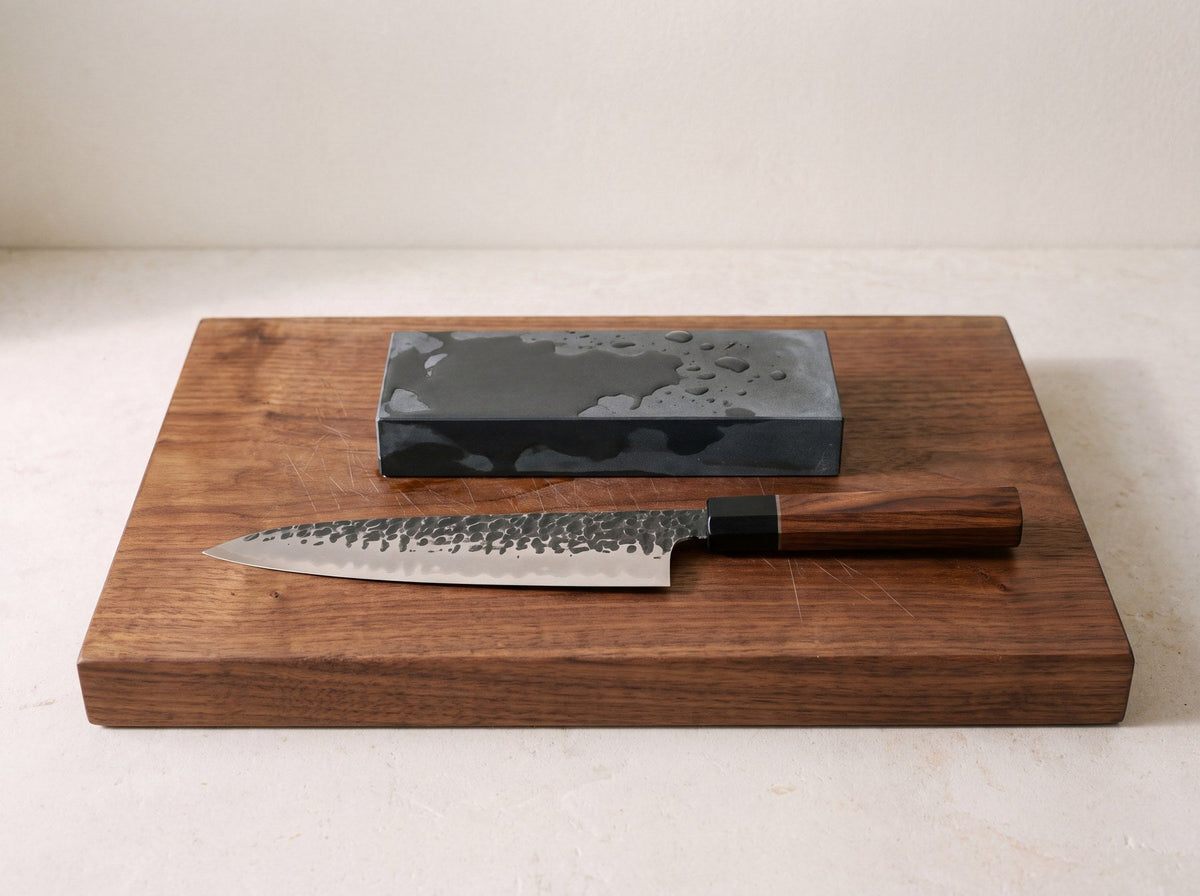
Sharpening Japanese chef knives is commonly done using whetstones. This method allows precise control over the edge and helps maintain the original blade geometry.
Regular light sharpening is generally preferable to waiting until the knife becomes extremely dull. Maintaining the correct angle during sharpening helps preserve the knife’s intended performance.
Recommended Japanese Knife Collection Setup
A complete kitchen setup does not require a large number of knives. A carefully selected collection can cover most preparation tasks.
A practical starter collection includes:
-
Gyuto knife
The primary all-purpose blade for vegetables, proteins, and general preparation.
-
Petty knife
A smaller blade for peeling, trimming, and detailed tasks. -
Nakiri or Santoku knife
Useful for vegetable preparation and everyday cooking. -
Knife set upgrade path
Add specialized blades such as Kiritsuke or Damascus knives as cooking needs develop.
For cooks building a coordinated collection, HARUTANI’s Japanese knife sets provide multiple blade options designed around different kitchen tasks.
Frequently Asked Questions About Japanese Chef Knives
What is the best Japanese chef knife for beginners?
A Santoku or Gyuto is often a practical starting point for beginners. Santoku offers compact handling, while Gyuto provides broader versatility for different cooking tasks.
Are Japanese chef knives better than Western knives?
Japanese and Western knives are designed differently. Japanese knives typically emphasize thinner blades and precision cutting, while Western knives often focus on heavier construction and different cutting techniques.
What steel is used in Japanese chef knives?
Japanese chef knives can use stainless steels such as VG-10, powder steels like SG2/R2, and carbon steels such as White Steel and Blue Steel. Each type offers different characteristics related to edge retention, maintenance, and sharpening.
Are Japanese Damascus chef knives worth buying?
Japanese Damascus chef knives can be a good choice for buyers who value layered blade designs, craftsmanship, and premium materials. The knife’s core steel and construction quality are more important factors than the Damascus pattern alone.
How do you maintain Japanese chef knives?
Japanese knives should be hand washed, dried immediately, stored safely, and sharpened with suitable tools such as whetstones. Proper maintenance helps preserve edge performance and blade condition.
Choose Your Japanese Knife Based on Cooking Style
| Cooking Style | Recommended Knife | Reason |
|---|---|---|
| Everyday cooking | Gyuto | Versatile preparation across ingredients |
| Vegetable-heavy meals | Nakiri | Flat edge supports vegetable cutting |
| Compact kitchen setup | Santoku | Easy handling and everyday usability |
| Professional preparation | Gyuto or Kiritsuke | Precision and extended cutting control |
Japanese chef knives represent a combination of craftsmanship, engineering, and culinary tradition. Understanding blade shapes, steel choices, and maintenance requirements allows you to select a knife that fits your cooking style and continues performing over time.
Explore HARUTANI’s collection of handcrafted Japanese kitchen knives to find a blade designed around your preparation needs.